KEHUA VALVE · EXPORT INDUSTRIAL VALVE MANUFACTURER

Throttling and regulation

Industrial Globe Valve Manufacturer

Compare KEHUA globe valves from China. Review cast, forged, bellows seal, Y-pattern, angle and pressure-seal series for your duty and project quotation.

Back to products
Globe Valves
Globe ValvesAPI 623 / ASME

API 623 / ASME

Globe Valves

Use this globe valve catalogue to separate shutoff or regulation duty from body manufacture, flow-path pattern and sealing features. Compare cast, forged, bellows seal, Y-pattern, angle and pressure-seal entries through their individual series pages. Flow capacity, leakage acceptance and installation limits still require the exact offered trim and drawing.

Pressure / size rangeAPI 623 / ASME · Class 150–2500
Design / test standardAPI 623 / ASME
MaterialsCarbon steel, low-alloy steel and stainless steel
ApplicationsSteam, high-temperature process and control duties

SERIES SELECTION COMPARISON

How should buyers shortlist a globe valve series?

Define shutoff or regulation duty and the fluid, flow, inlet/outlet pressure and temperature cases before comparing globe valve series. Review body manufacture, flow-path pattern, stem sealing and bonnet joint as separate decisions. Nominal size and body shape do not establish capacity; request the offered trim's flow data, leakage acceptance and installation drawing where the duty requires them.

Does a cast or forged body establish flow capacity?

No. Compare body grade, actual passage, disc and seat trim and pipe ends for the cast and forged globe valve series. For regulation, provide the flow cases and request the offered model's Cv/Kv and usable travel. Nominal size or body manufacture is not a substitute for flow-capacity review of the actual trim.
How do Y-pattern and angle layouts change the review?

Compare the Y-pattern bonnet and operator envelope with the angle body's inlet and outlet routing against the piping drawing. Confirm flow arrow, supports, face-to-face dimensions and maintenance access for each proposed configuration. Request pressure-loss information for the actual flow duty; the body shape alone does not establish a quantified performance advantage.

Do a bellows seal and pressure-seal bonnet do the same job?

No. The bellows series addresses the external stem leakage path, while pressure-seal construction addresses the bonnet joint. Review bellows material and service cycles separately from bonnet assembly and thermal cycling. Agree external-leakage, pressure-boundary and seat acceptance for the complete globe valve; one sealing feature does not establish the other tests or limits.

Use these decisions to compare existing catalogue constructions, not to assume interchangeability. Confirm medium suitability, size, pressure, temperature, materials and connections on the offered model’s datasheet and drawing.

TECHNICAL SELECTION

Select by service conditions

Use the sample catalogue figures as a starting point, not a universal rating. Confirm the exact model, size, pressure class, material, end connection and operating conditions on an approved datasheet before ordering.

01

Service medium

State whether the duty is shutoff, regulation or both, with medium composition, phase and solids; request a trim review for the actual service.

02

Size and dimensions

Give line size, bore and connection envelope, pipe routing, flow direction and bonnet/operator maintenance space. Review the selected body pattern on a drawing.

03

Pressure and temperature

Provide flow cases, inlet/outlet pressures, allowable pressure loss, normal/design temperature and cycling conditions with units. Request model flow data where regulation is required.

04

End connection

Specify mating flange or weld/thread details, joining constraints and the piping standard. Keep end connections separate from flow-path and sealing choices.

Sample catalogue reference

The figures describe the named catalogue construction. Size, pressure, temperature, material and end options are not interchangeable combinations; the maximum values do not apply simultaneously. Confirm the offered configuration, seat/seal compatibility, pressure–temperature limits and dimensions on its approved datasheet and drawing. The listed ranges summarize catalogue sizes, not every intermediate DN.

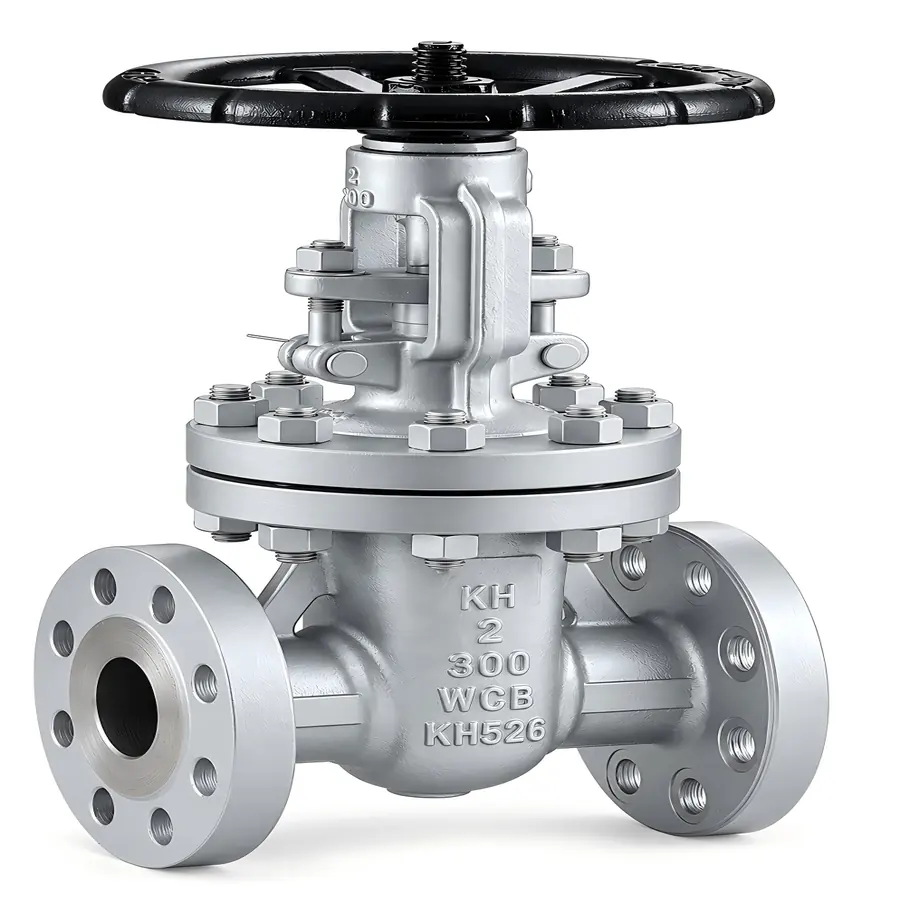
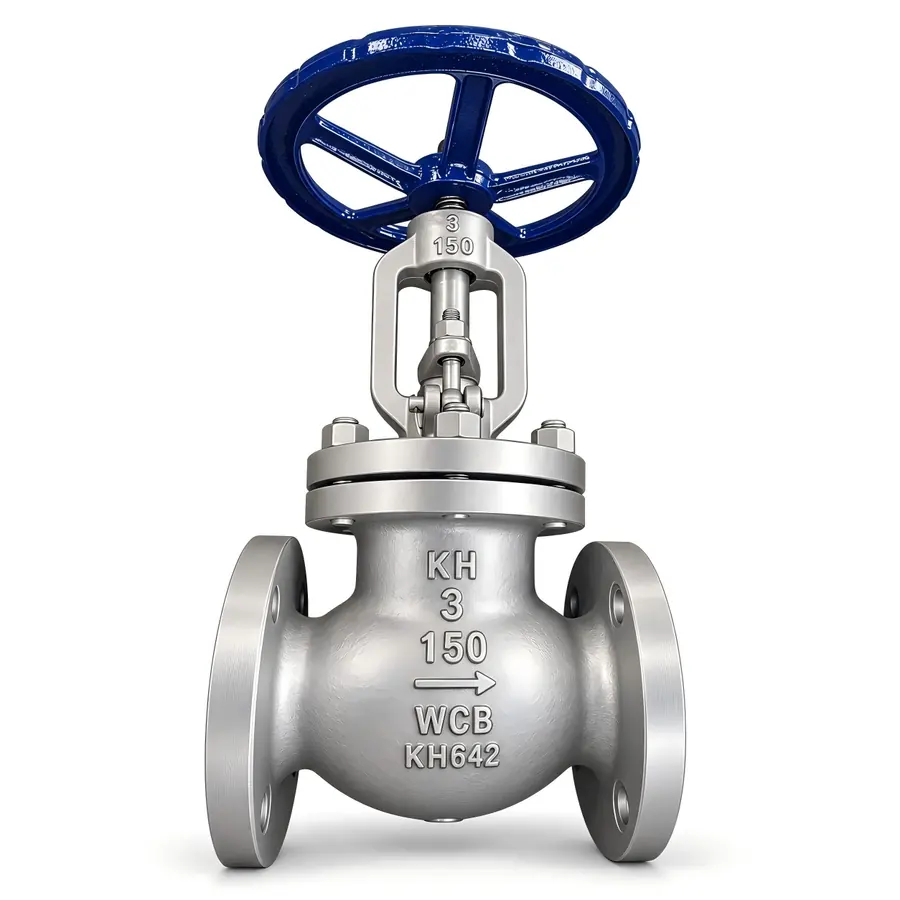
Cast steel bolted-bonnet globe valve

Cast steel bolted-bonnet globe valve — Sample catalogue reference
Pressure classNominal sizes shownEnd styles shownPrinted pages
ASME Class 150NPS 2–24 / DN 50–600RF / RTJ flange · BW26
ASME Class 300NPS 2–24 / DN 50–600RF / RTJ flange · BW26
ASME Class 600NPS 2–12 / DN 50–300RF / RTJ flange · BW27
Review this series: Cast steel bolted-bonnet globe valve →

RF = raised-face flange · RTJ = ring-joint flange · BW = butt-weld end

Source: supplied valve sample booklet; page numbers refer to its printed pages. Confirm the current model datasheet before ordering.

These are model- and class-specific examples. Not every size or end style is available in every configuration; final dimensions and ratings require an approved drawing and datasheet.

Send operating data for review

GLOBE VALVE PROCUREMENT

Choose the construction, then review the actual flow duty

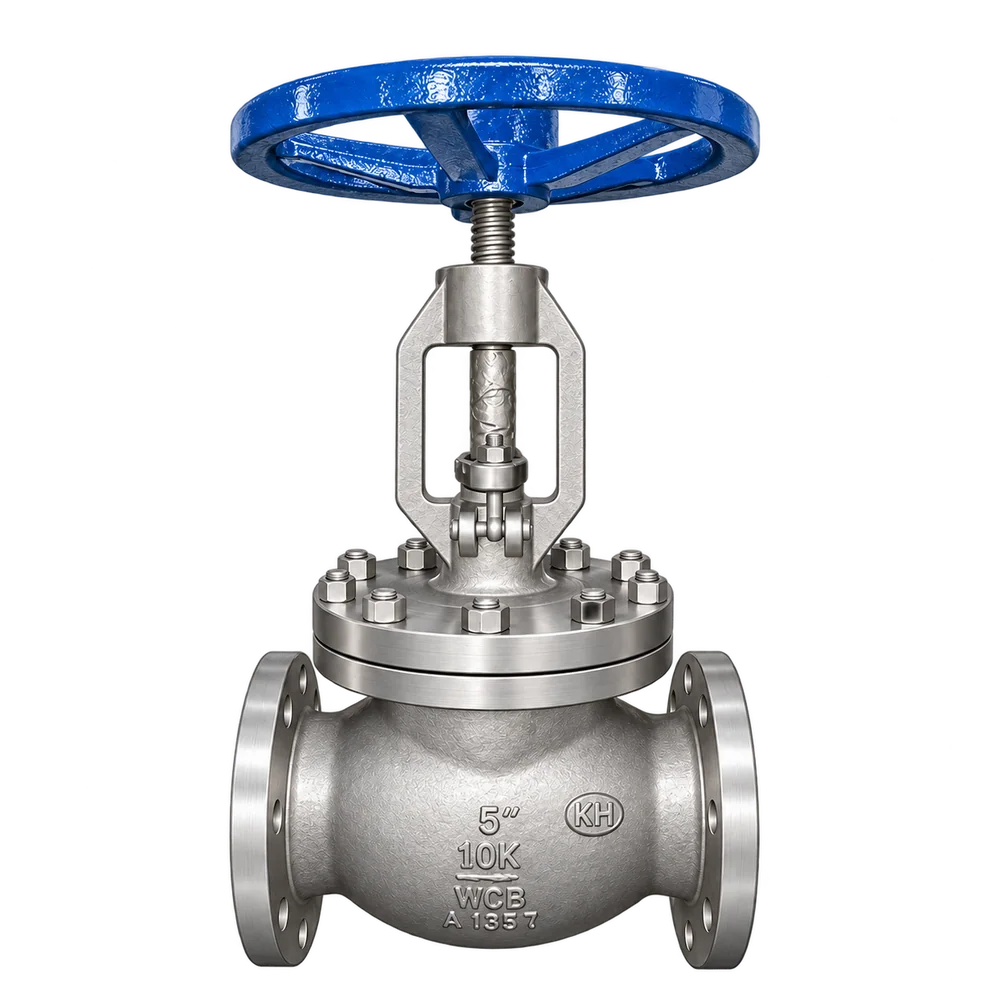
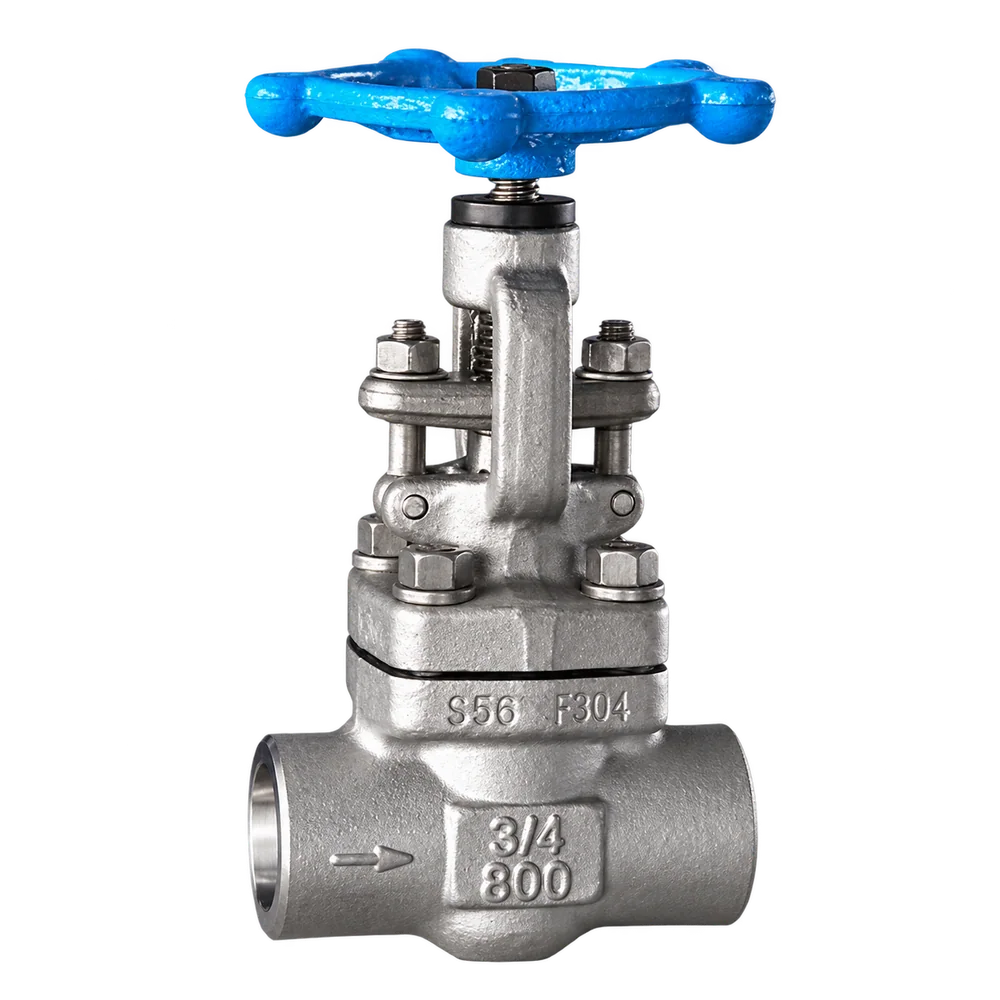
Wenzhou Kehua Valve Co., Ltd. manufactures industrial valves in Wenzhou, China. The KEHUA globe valve catalogue includes cast steel, forged steel, bellows seal, Y-pattern, angle and pressure seal series. Body material, flow-path geometry, stem sealing and bonnet construction are separate decisions: these names do not imply that every option is available in every combination.

Review the manufacturer profile

Cast steel globe valves

Review the proposed casting grade, end connection and pressure–temperature limits. Cast construction alone does not establish suitability for a particular steam or process duty.

Review this series: Cast steel globe valves

Forged steel globe valves

Confirm the forging grade, bore, end preparation and installation envelope on the model drawing. Do not assume the cast and forged series share the same dimensions or ratings.

Review this series: Forged steel globe valves

Bellows seal globe valves

Review bellows material, operating temperature, cycling requirements and backup packing. Request the applicable stem-sealing test conditions rather than assuming unrestricted zero leakage.

Review this series: Bellows seal globe valves

Y-pattern globe valves

Check the model's flow path and available flow data against the permitted pressure drop. A Y-pattern label is not a guarantee of a specific flow coefficient or energy saving.

Review this series: Y-pattern globe valves

Angle globe valves

Confirm inlet and outlet orientation, pipe layout, support and flow direction on the drawing. The angle body changes the piping arrangement; service limits still require model-specific review.

Review this series: Angle globe valves

Pressure seal globe valves

Review the bonnet joint, gasket, maintenance procedure and rated operating conditions. A pressure seal bonnet is a construction choice, not a substitute for checking the complete valve rating.

Review this series: Pressure seal globe valves

What should a globe valve RFQ include?

  • Duty and fluid: identify isolation, intermittent throttling or continuous modulation; provide fluid composition and phase, minimum/normal/maximum flow, inlet and outlet pressures, temperature and cycling frequency.
  • Flow review: for regulation, request model-specific Cv/Kv, flow characteristic, usable travel and actuator information. Ask engineering to assess pressure drop, cavitation, flashing or noise where relevant; a manual globe valve is not automatically a sized control valve.
  • Mechanical fit: confirm size, connection standard, face-to-face dimensions, body and trim materials, seat design, installation orientation and the manufacturer's flow arrow. Check the pressure–temperature rating of the quoted configuration, not only its Class label.
  • Acceptance and maintenance: agree the applicable design and test standards, seat and stem leakage criteria, bellows requirements if selected, inspection records, spare parts and required documents before order approval.

Catalogue ranges describe the family, not a guaranteed rating for every series. Availability and suitability must be confirmed in the quotation, drawing and datasheet for the selected model.

VALVE PRODUCT FAMILIES

Browse the catalogue by valve type

Start with a valve family, then review the construction and service series used in a technical RFQ.

Throttling and regulation

Globe valve series covered

Use the globe valve page when pressure drop, flow regulation and shutoff quality must be reviewed together.

How buyers usually specify this family
Cast steel globe valve - Globe Valves
BS 1873Flow regulation

Cast steel globe valve

A globe valve varies the opening between the disc and seat. Cast steel identifies the body, not the usable control range. Confirm whether the duty is shutoff or regulation before checking flow capacity, pressure loss and trim.

Cast body

Request this series
Forged steel globe valve - Globe Valves
API 602High pressure

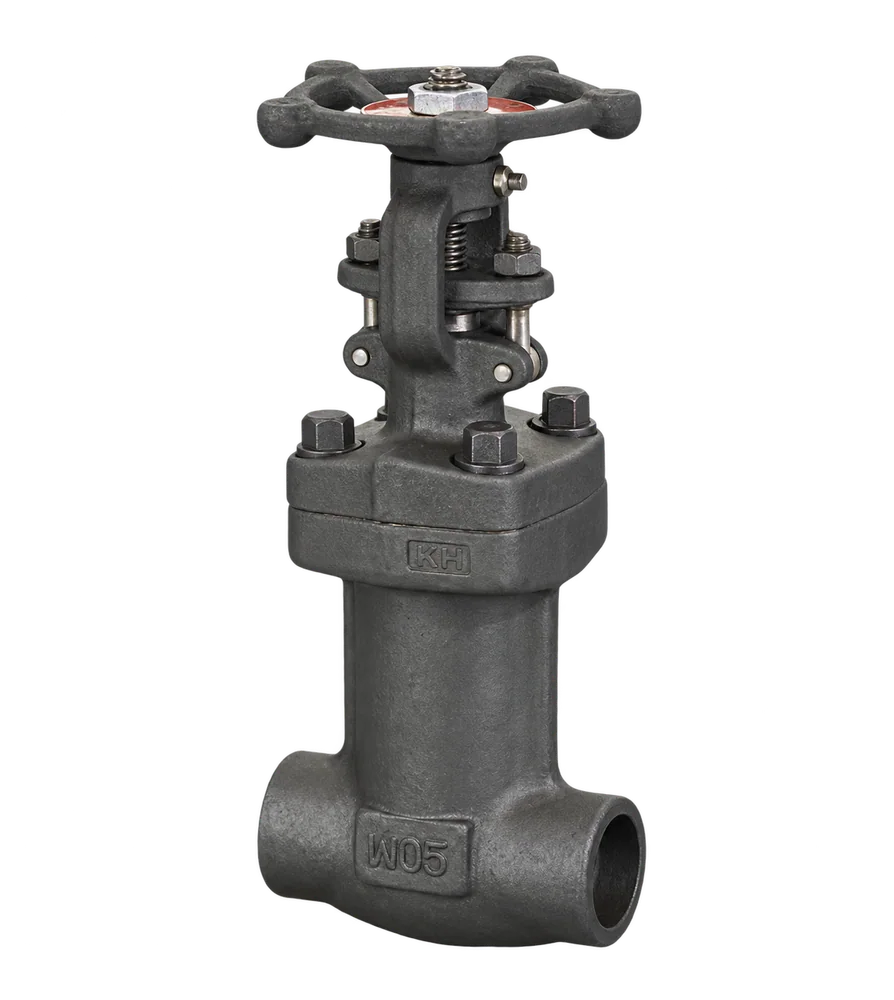
Forged steel globe valve

A forged globe valve combines a forged body with a disc-and-seat closure. For compact piping, check the actual passage, connection details and service access; nominal pipe size does not establish the valve flow coefficient.

Forged compact

Request this series
Bellows seal globe valve - Globe Valves
BS 1873External-leakage control

Bellows seal globe valve

A bellows seal addresses leakage along the moving stem. Seat shutoff is a different sealing function. Specify bellows material and service cycles, any backup packing, and separate external-leakage and seat-test requirements.

Bellows sealed

Request this series
Y-pattern globe valve - Globe Valves
BS 1873Low pressure drop

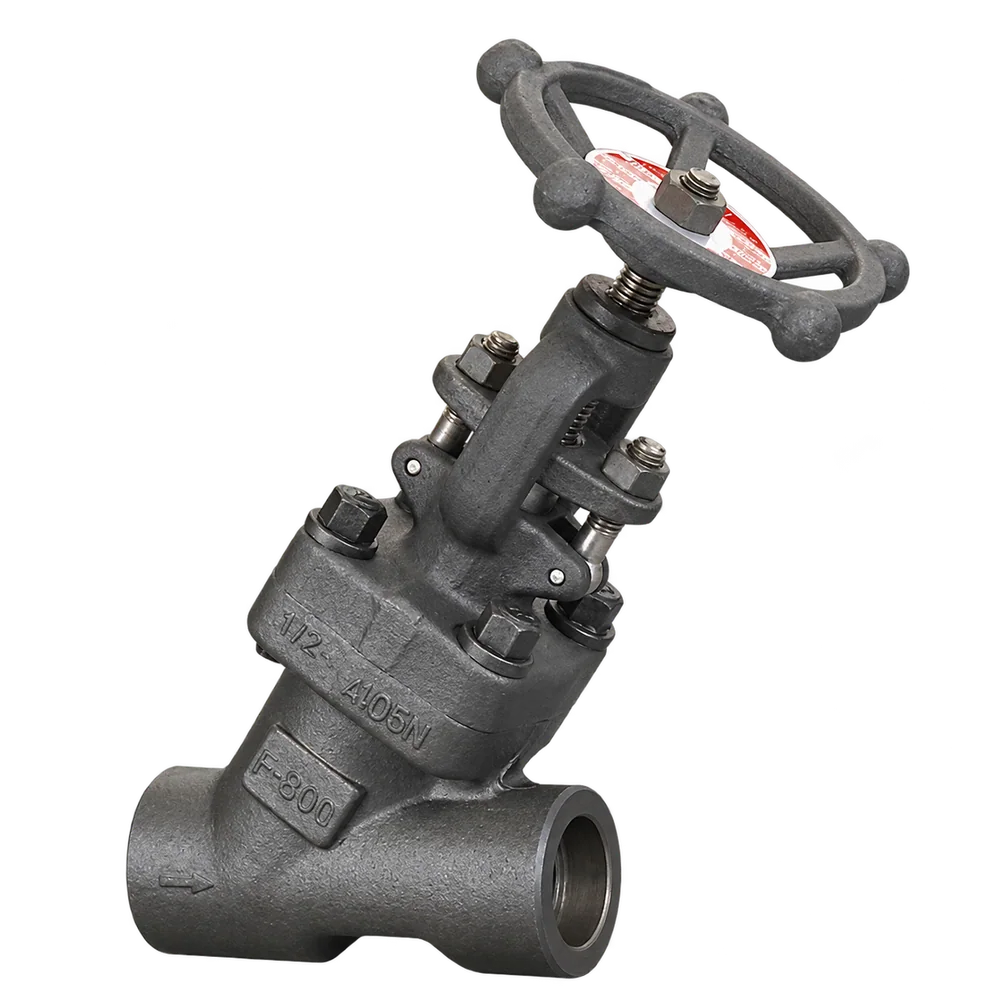
Y-pattern globe valve

A Y-pattern globe valve uses an inclined bonnet and stem layout. Review the actual flow passage and installed envelope; lower pressure loss cannot be quantified without model-specific flow data at the proposed duty.

Y pattern

Request this series
Angle globe valve - Globe Valves
BS 1873Compact routing

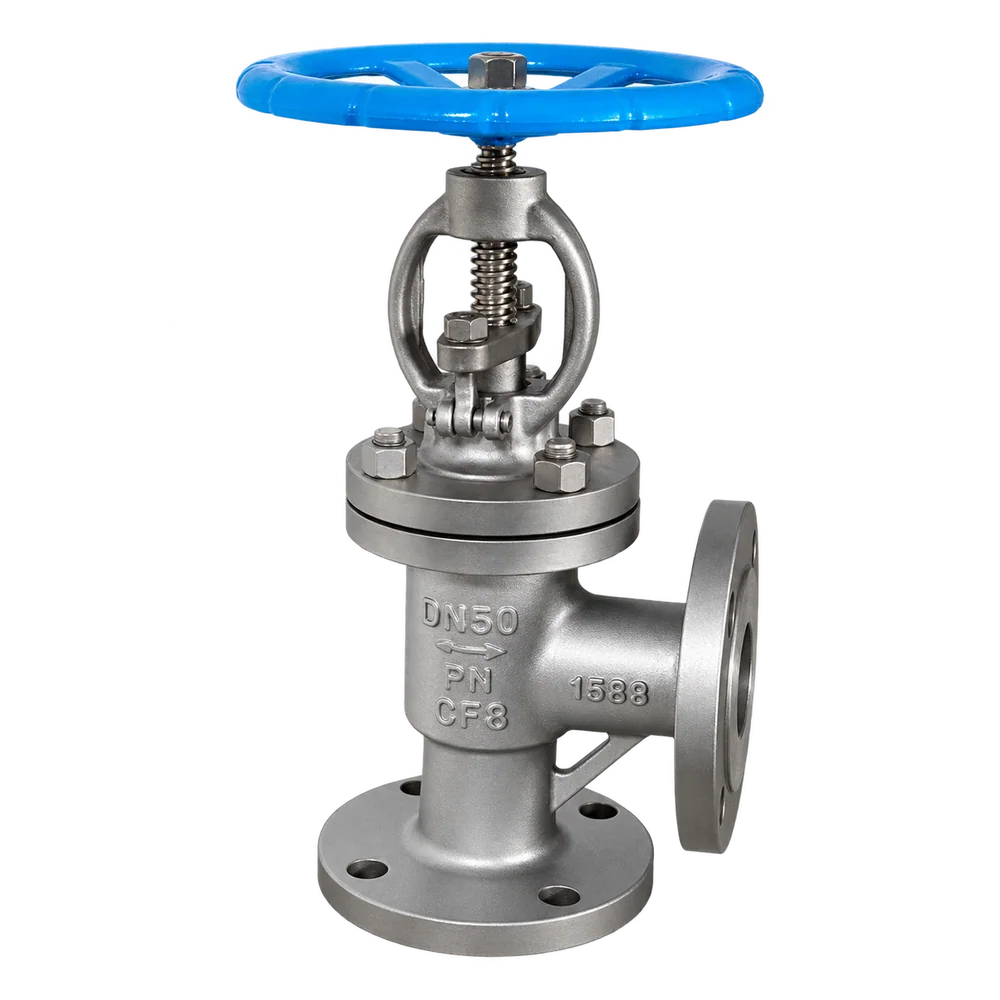
Angle globe valve

An angle-pattern globe valve changes the inlet-to-outlet routing through the valve body. Confirm connection orientation, supporting loads and maintenance clearance against the piping drawing, with flow direction taken from the approved model.

Angle pattern

Request this series
Pressure seal globe valve - Globe Valves
BS 1873Power & steam

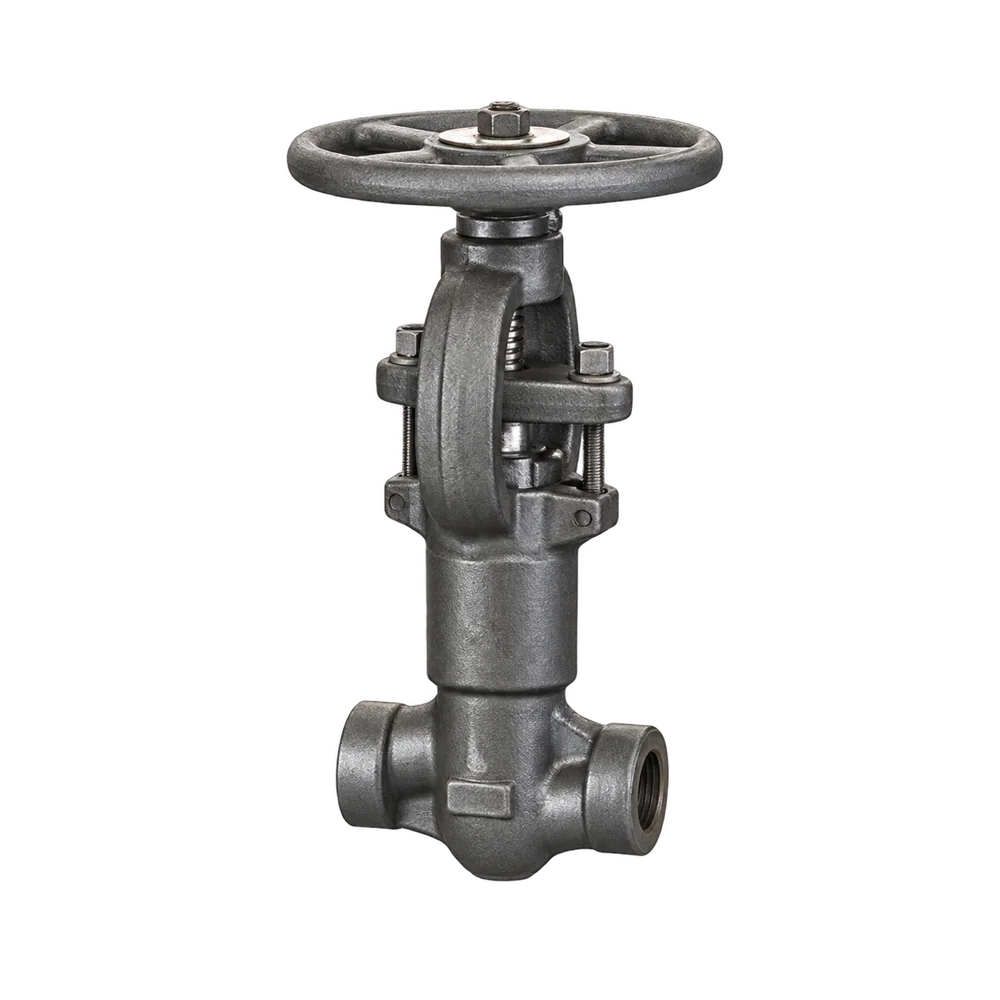
Pressure seal globe valve

A pressure-seal globe valve specifies the bonnet joint, not the control characteristic or stem seal. Review the bonnet seal for pressure and thermal cycles, then assess disc, seat and flow data for the required duty.

Pressure seal bonnet

Request this series

Technical data

How buyers usually specify this family

For a globe valve quotation, identify shutoff/regulation duty, body pattern, trim, stem sealing, bonnet and connections for each schedule item. Supply flow and pressure cases with quantity, destination, requested date and approval-document requirements. Ask for the exact drawing, any required model flow data and separate leakage-test acceptance, plus deviations and unresolved points. Use the line-item RFQ checklist and quality-document review to define the requested submission package. Unknown values can remain open for technical confirmation.

  • Confirm whether the duty is throttling, isolation or both.
  • Send flow direction, pressure drop, temperature and seat leakage requirement.
  • Match trim, packing and bonnet type to steam, thermal cycling or emission limits.
  • API 623 / ASME · Class 150–2500

Share the operating data you already have. Unknown fields can stay blank while our team reviews the application.

Operating data

WhatsApp