
Updated: — Clarified product alternatives and linked enquiry actions to the matching product RFQ sections; body-entry construction still requires drawing confirmation.
KEHUA VALVE publishes this general procurement guide using the technical references listed below. It is not a model datasheet or a record of a completed factory test. Confirm the offered valve against its approved drawing, datasheet and project-specific inspection records.
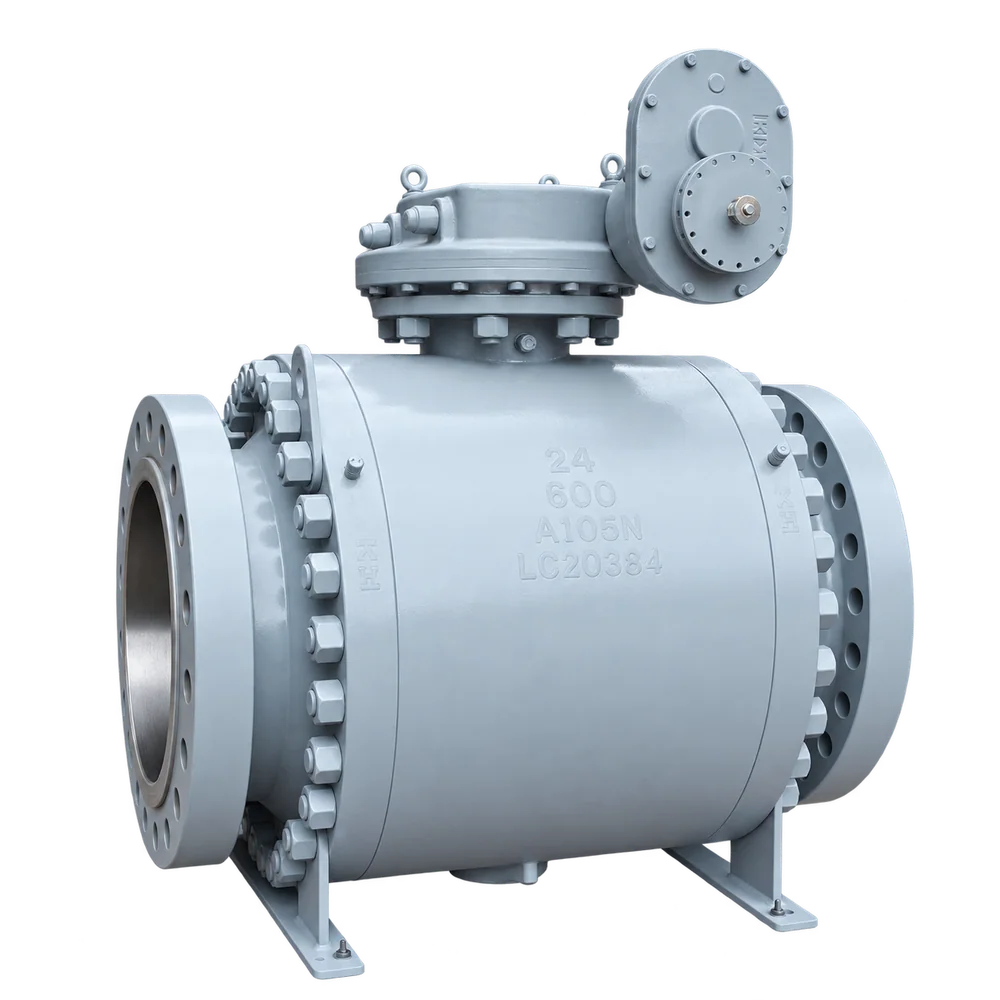
| Review point | Side-entry body | Top-entry body |
|---|---|---|
| Meaning | The body is assembled from sections accessed from the side or pipeline axis. | The closure assembly is accessed through an upper body opening or cover. |
| What it does not mean | It does not describe where the actuator is mounted. | It does not by itself guarantee online maintenance. |
| Drawing review | Check body joints, bolting, end connections, envelope and removal space. | Check cover arrangement, lifting access, internal removal path and site clearance. |
| Maintenance planning | Confirm whether pipeline removal is required for the proposed maintenance task. | Confirm which components can actually be serviced with the body installed. |
| Final approval | Use the manufacturer’s drawing, datasheet, test scope and project specification. | Apply the same evidence-based review; the construction name alone is insufficient. |
What is a side-entry trunnion ball valve?
A side-entry trunnion ball valve combines two separate design descriptions. Side-entry describes how the pressure-containing body is assembled and accessed. Trunnion-mounted describes how the ball is mechanically supported. Pressure loads are carried by the supports while the seat system moves or energizes to provide sealing.
The term side-entry does not mean that the actuator is installed on the side. Actuator orientation is a separate arrangement that must be shown on the approved general arrangement drawing. Buyers should ask the supplier to identify body construction, ball support and actuator position independently so that quotations are technically comparable.
Side-entry versus top-entry: what changes for the buyer?
The practical difference is the body access route and the resulting manufacturing, inspection and maintenance arrangement. A side-entry body normally uses multiple body sections joined along the pipeline axis. A top-entry design provides access from an upper opening. The exact number of body pieces, joint design and removable components depend on the offered model, so the construction name should be verified against the drawing.
Do not assume that every top-entry valve can be fully maintained in line, or that every side-entry valve must be removed for every task. Ask which components can be inspected or replaced with the body installed, what lifting and access space is required, and whether the pipeline must be depressurized, drained or separated. The project maintenance philosophy should decide which arrangement is preferable.
Start selection with service conditions
Before comparing valve construction, define the medium, composition, phase, solids content, corrosion risk and operating function. Record normal, minimum and maximum operating conditions as well as design pressure and design temperature. State the maximum differential pressure expected during opening and closing, because this value affects seat loading and actuator torque review.
Also identify start-up, shutdown, cleaning, depressurization and credible upset conditions. A nominal pressure class alone does not establish suitability at every temperature or for every sealing material. The supplier should review the complete proposed configuration and state assumptions or limits in the technical offer.
Specify bore, size and end connections
Give the nominal pipe size, pressure class, end connection, flange facing or weld-end details, pipe schedule and required face-to-face dimension. If the line has pigging or internal-clearance requirements, state the pig type and minimum clear passage. The phrase full bore should be tied to the governing project definition and an approved dimensional drawing.
Check valve envelope, weight, centerline height, support needs and removal clearances. For automated packages, include actuator and accessory dimensions. These details prevent a valve that is acceptable on paper from creating interference with nearby pipework, structures or lifting routes at the site.
Choose soft or metal seats from the duty
Soft-seated and metal-seated trunnion ball valves should be compared against the fluid, temperature, particles, cycling frequency and required leakage acceptance. A soft seat can provide effective shutoff within its validated operating range. A metal seat may be evaluated for higher temperature, abrasive or severe-service conditions, but it is not automatically the better choice for every project.
Request the proposed seat, insert, seal, packing, stem and ball materials, not only the body grade. Ask for the pressure-temperature limits and shutoff acceptance that apply to the offered combination. If a quotation presents several seat options, require the supplier to identify which option is included in the price and why it matches the stated service.
Confirm seat action, cavity relief and sealing direction
Ask the supplier to describe how upstream, downstream and body-cavity pressure act on the proposed seats. Confirm the sealing direction, body-cavity pressure-relief arrangement, vents and drains shown on the quotation. These functions belong to the exact seat design and cannot be inferred from the words trunnion mounted alone.
If the project requires double block and bleed, double isolation and bleed, bidirectional sealing or another defined isolation function, cite the governing definition and acceptance test in the RFQ. Similar commercial phrases can describe different seat arrangements. A clear datasheet, schematic and test procedure are more reliable than a generic catalogue claim.
Manual, pneumatic or electric side-entry trunnion ball valve: RFQ inputs
Specify manual, gearbox, pneumatic, electric or hydraulic operation. For an actuator package, provide available power or air pressure, control signal, fail position, operating time, cycle frequency, hazardous-area classification and environmental requirements. The valve supplier should use torque data for the selected size, seats, differential pressure and temperature.
Request breakaway, running and closing torque together with the sizing margin and any maximum permitted stem torque. Review the mounting interface, coupling, travel stops and accessories as one assembly. Trunnion support can change seat loading, but the word trunnion is not an actuator-sizing calculation.
- Manual or gearbox operation: define access, permitted operating effort, operating frequency and any locking or position-indication requirements. Confirm the gearbox and valve as a matched assembly.
- Pneumatic operation: provide the available minimum and maximum air supply, required fail position, control signal and accessory requirements. Ask the supplier to identify the proposed action and verify torque at the limiting supply conditions.
- Electric operation: state voltage, frequency, control interface, operating time, duty and environmental or hazardous-area requirements. Specify the required behavior on loss of power; do not assume an electric actuator has a fail-safe function.
- For every automated package, obtain the valve torque data, actuator sizing calculation, mounting drawing and stated assumptions for the actual seats, maximum differential pressure and temperature. Do not infer an actuator size from nominal valve size alone.
Automated side-entry trunnion ball valve quotation: fields to complete
An automated valve enquiry needs both valve service data and actuator inputs. Copy the fields below into your project enquiry and leave unknown items as 'to be confirmed'. Side-entry body construction, trunnion ball support and actuator selection are independent requirements; confirm all three on the offered drawing and datasheet.
- Valve duty: fluid / phase ___; operating and design pressure / temperature with units ___; maximum differential pressure during travel ___; minimum / normal / maximum flow if required ___.
- Valve configuration: size ___; pressure class ___; clear bore ___; body construction ___; body, ball, seat and seal materials ___; end-connection standard and drawing revision ___.
- Drive: pneumatic / electric / hydraulic ___; minimum and maximum air or hydraulic supply, or electrical voltage and frequency ___; opening and closing time ___; cycles per hour ___.
- Controls: on/off or modulation ___; control signal ___; required position on loss of power, air and signal ___; position feedback, solenoid, switches or positioner scope ___.
- Installation: hazardous-area classification ___; enclosure and ambient conditions ___; mounting orientation ___; available operating and maintenance clearance ___.
- Supplier confirmation: valve torque envelope ___; actuator sizing assumptions ___; mounting / coupling drawing ___; included accessories ___; agreed valve pressure tests and package functional acceptance ___; deviations ___.
Agree standards, inspection and project documents
State the required design, dimensional, material and testing standards with their contract editions. API Specification 6D and ASME B16.34 have defined scopes; additional fire-test, fugitive-emissions, sour-service, low-temperature or project-specific requirements should be listed separately when applicable. Ask for evidence that relates to the offered design and scope.
Prepare a document index before ordering. Typical project records may include the approved datasheet and drawing, material certificates, traceability records, inspection and test plan, pressure-test reports, nondestructive-examination records, coating records, actuator sizing and installation instructions. Identify review, witness and hold points before production begins.
Side-entry trunnion ball valve RFQ checklist
Send the same confirmed information to every shortlisted supplier and request a marked deviation list. Keep unknown values visible as open items rather than allowing each bidder to make a different assumption. The following fields are a practical starting point for a comparable quotation.
- Service: medium, composition, phase, solids, corrosion concerns and operating function.
- Conditions: operating and design pressure and temperature, plus maximum operating differential pressure, with units.
- Valve: nominal size, pressure class, side-entry body, trunnion-mounted ball, required bore and end connections.
- Materials: body sections, ball, stem, seats, seals, packing, bolting and applicable piping material class.
- Sealing: direction, leakage acceptance, cavity-pressure relief and any project-defined isolation function.
- Operation: manual or actuator type, supply conditions, fail position, operating time and cycle frequency.
- Standards and verification: required editions, tests, inspection points, certificates, drawings and final records.
- Commercial details: quantity by line item, destination, Incoterm if known, requested delivery date, packing and spares.
Questions buyers frequently ask
Is side-entry the same as side-mounted actuator? No. Side-entry refers to pressure-containing body construction. Actuator mounting and orientation must be specified separately and shown on the drawing.
Is a side-entry valve always three-piece? No. Suppliers use different body constructions. Confirm the number of body sections, joints and fasteners on the proposed model drawing rather than relying on a general label.
Is a trunnion ball valve always full bore? No. Ball support and bore designation describe different features. State the required bore and clear passage explicitly in the RFQ.
What should I send for a KEHUA selection review? Provide the medium, size, pressure class, operating and design temperatures, material requirements, quantity, end connection, actuation and applicable project standards. KEHUA can then identify missing data and review an appropriate project configuration.
Compare valve families
Use this guide together with the relevant valve family and project operating data.
Primary technical references
Confirm the edition required by the contract. The project specification and purchased standard remain controlling.
More technical notes